Robotics in viticulture at Pescopagano with Vanto
From UV-C light against diseases to autonomous tractors: the journey into viticultural robotics led by Alessandro Zanette of Vanto.
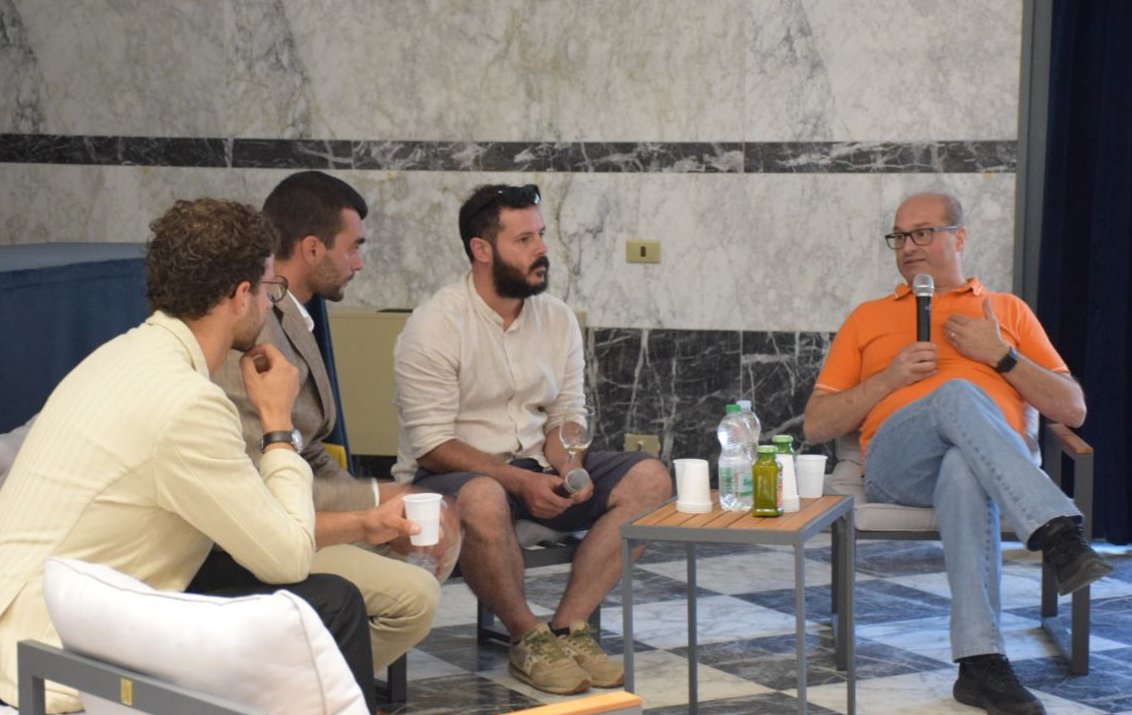
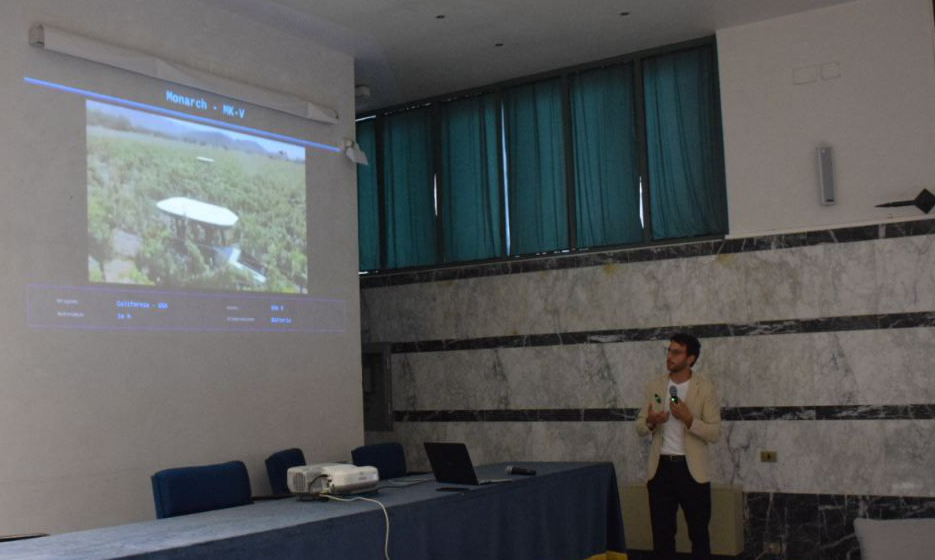
After listening to winegrowers recount their difficulties, the RoboField of the Pesco Innovation Hub in Pescopagano, in Basilicata, got to the heart of the technology. Taking the floor was Alessandro Zanette, a graduate in viticulture and oenology and co-founder of Vanto Collaborative Robotic Systems, with a presentation built to give concrete numbers to the problems that had emerged from the field and to show, videos in hand, what robotics is already doing in vineyards, in Italy and abroad.
"
After listening to winegrowers recount their difficulties, the RoboField of the Pesco Innovation Hub in Pescopagano, in Basilicata, got to the heart of the technology. Taking the floor was Alessandro Zanette, a graduate in viticulture and oenology and co-founder of Vanto Collaborative Robotic Systems, with a presentation built to give concrete numbers to the problems that had emerged from the field and to show, videos in hand, what robotics is already doing in vineyards, in Italy and abroad.
"
Perché la robotica entra adesso nel vigneto: il contesto presentato da Vanto a Pescopagano
Zanette ha aperto inquadrando il contesto, e la fotografia è quella di un settore sotto pressione. La carenza di manodopera è il primo nodo: trovare addetti, in cantina come in vigna, è diventato difficile un po' ovunque in Europa. A questo si aggiunge l'aumento dei costi di produzione degli ultimi anni e, sul fronte della sicurezza, il peso delle cosiddette "morti verdi", gli incidenti mortali in agricoltura legati soprattutto all'uso dei trattori, che in Italia continuano a contarsi a centinaia ogni anno.
Sul clima il dato è netto: il 2023 è stato l'anno più caldo mai registrato, con 1,48 gradi Celsius in più rispetto al periodo pre-industriale (1850-1900). Lo stesso anno, non a caso, in cui diversi produttori hanno visto sfumare gran parte del raccolto. Ci si mette poi Bruxelles, con la strategia Farm to Fork che punta a dimezzare l'uso dei fitofarmaci entro il 2030. Messi in fila questi numeri, ha spiegato Zanette, la robotica smette di sembrare un lusso.
«La robotica non è più un lusso, ma una necessità per garantire continuità, sicurezza e sostenibilità nelle operazioni viticole.», Alessandro Zanette, co-founder di Vanto
Sul clima il dato è netto: il 2023 è stato l'anno più caldo mai registrato, con 1,48 gradi Celsius in più rispetto al periodo pre-industriale (1850-1900). Lo stesso anno, non a caso, in cui diversi produttori hanno visto sfumare gran parte del raccolto. Ci si mette poi Bruxelles, con la strategia Farm to Fork che punta a dimezzare l'uso dei fitofarmaci entro il 2030. Messi in fila questi numeri, ha spiegato Zanette, la robotica smette di sembrare un lusso.
«La robotica non è più un lusso, ma una necessità per garantire continuità, sicurezza e sostenibilità nelle operazioni viticole.», Alessandro Zanette, co-founder di Vanto
Labour shortage in viticulture: the European data
Finding workers in the winery as well as in the vineyard has become difficult throughout Europe, and Italy is no exception: according to the data cited in the presentation, 77% of EU wineries are looking for staff (The Times, 2024).
Rising production costs for wine-growing companies
Production costs have grown by 21% compared to 2019 (Centro Studi Divulga, Informatore Agrario, 2025), eroding the margins of wine-growing companies in Italy and in Basilicata.
Safety in agriculture: green deaths in Italy
Fatal accidents in agriculture, linked above all to the use of tractors, have an average of 171 victims per year in the decade 2010-2020 (ASAPS Observatory): a figure that closely concerns companies in southern Italy as well.
Cambiamento climatico e normative europee per la viticoltura italiana
Il 2023, con 1,48 gradi Celsius in più rispetto al periodo pre-industriale, è stato l'anno più caldo mai registrato; sul fronte normativo la strategia Farm to Fork della Commissione Europea punta a dimezzare l'uso dei fitofarmaci entro il 2030, con impatti significativi sulla viticoltura italiana e sulle aziende in regioni come la Basilicata.
From autonomous tractors to specialized robots: the overview presented by Vanto at RoboField
The most visual part of the presentation followed a logical, not chronological, thread. It begins with the most obvious idea: making existing machines autonomous by fitting sensors and automatic guidance onto traditional tractors, as BlueWhite Robotics does with its retrofit kits. The next step is rethinking the machine from scratch, and that is the path taken by Monarch: a Californian electric, autonomously driven tractor that swaps diesel for a battery, with the resulting implications for running costs and environmental impact.
Then come the robots designed to solve a single task and do it exceptionally well. Vitibot, with its Bakus, starts from under-vine management, where French regulations are even stricter than ours. Naïo Technologies, one of the most established names in the sector, showcased the Ted robot and a maturity also confirmed by investment: 33 million dollars raised in the 2022 Series C round. Alongside them, a gallery of very different solutions in terms of size and application, from the small VitiRover for grass mowing to the Japanese Yanmar YV01 with a combustion engine for treatments, all the way to New Zealand's Prospr by Robotics Plus and the Italian Black Shire, born in the vineyards of Barolo.
The pattern repeats itself: start with a single task, perfect it, and then broaden the scope, up to the toolkit logic, where the same platform swaps tools depending on what needs to be done.
Then come the robots designed to solve a single task and do it exceptionally well. Vitibot, with its Bakus, starts from under-vine management, where French regulations are even stricter than ours. Naïo Technologies, one of the most established names in the sector, showcased the Ted robot and a maturity also confirmed by investment: 33 million dollars raised in the 2022 Series C round. Alongside them, a gallery of very different solutions in terms of size and application, from the small VitiRover for grass mowing to the Japanese Yanmar YV01 with a combustion engine for treatments, all the way to New Zealand's Prospr by Robotics Plus and the Italian Black Shire, born in the vineyards of Barolo.
The pattern repeats itself: start with a single task, perfect it, and then broaden the scope, up to the toolkit logic, where the same platform swaps tools depending on what needs to be done.
BlueWhite Robotics: the retrofit of existing tractors in vineyards
Sensor kits and automatic guidance that make machines already on the farm autonomous (California, USA). Indicative cost: 30,000 euros upfront and 30,000 euros/year subscription.
Monarch MK-V: the autonomous electric tractor for the vineyard
A Californian electric and autonomously guided tractor that replaces diesel with a battery. Indicative cost: 90,000 euros, approximately 10 hours of autonomy per charge.
Vitibot Bakus: the French robot for under-vine row management
French robot dedicated to under-vine row management, where European regulations are particularly strict. Approximate cost: 120,000 euros, with a working capacity of 5.5-6 hectares per day, battery-powered.
Naïo Technologies Ted: a mature reference for viticultural robotics
Among the most established names in the sector: the Ted robot (France, approximately €175,000, approximately 25 hectares per season, battery-powered) and a maturity confirmed by investments, with $33 million raised in the Series C round of 2022.
A gallery of specialized robots for the vineyard: from the VitiRover to the Italian Black Shire
From the small VitiRover for mowing grass to the Japanese Yanmar YV01 with a combustion engine for treatments, through to the New Zealand Prospr by Robotics Plus and the Italian Black Shire, born in the vineyards of Barolo. Each machine starts from a single operation and then broadens its scope to the logic of the toolkit, an approach discussed at RoboField in Pescopagano.
Robotic fleets, night work and UV-C light: Vanto's research for the vineyard of the future
There is also a matter of size that is rarely considered. A traditional tractor must be large and powerful because the operator's time is precious and must be used quickly. A robot does not have that problem: it has all the time it wants, so it can afford to be smaller and lighter. And it can move in a fleet, with multiple machines operated by a single operator, even at night, when a person would not be able to work.
It is precisely on night work that the research of Zanette and Vanto is grafted: the application of UV-C light through an autonomous robotic platform (the Thorvald system by Saga Robotics) to control vine pathogens without resorting to chemicals. A light at a particular wavelength, distributed at night between the rows, in place of a chemical agent. It is the kind of innovation that, until recently, seemed distant, and which today is also being brought to Pescopagano thanks to the ecosystem of the Pesco Innovation Hub.
It is precisely on night work that the research of Zanette and Vanto is grafted: the application of UV-C light through an autonomous robotic platform (the Thorvald system by Saga Robotics) to control vine pathogens without resorting to chemicals. A light at a particular wavelength, distributed at night between the rows, in place of a chemical agent. It is the kind of innovation that, until recently, seemed distant, and which today is also being brought to Pescopagano thanks to the ecosystem of the Pesco Innovation Hub.
Advantages, limits and prospects of viticultural robotics: Vanto's analysis
The advantages, Zanette explained, can be seen on multiple fronts: healthier plants because mechanical stress is reduced, less compacted soil that drains better, CO2 sequestration, and consequently higher quality production. Zanette did not, however, spare criticism of the problems, which remain numerous:
High initial cost: a barrier for small wine-growing companies
With a long and difficult-to-predict return on investment, the cost represents an obstacle especially for smaller companies. In the presentation, the cost per robot is indicated as between 110,000 and over 200,000 euros, with companies under 20 hectares struggling to justify the investment. A particularly significant challenge for wine-growing realities in Southern Italy and Basilicata.
Land-related limitations: the problem of slopes for viticulture in hilly areas
Steeper slopes, obstacles, and irregular plots remain critical challenges for many robotic platforms: a limitation that is particularly felt in hilly territories such as those of Basilicata and the southern Apennines.
Maintenance and skills: the learning curve for wine-growing companies
Spare parts, specialized technicians and trained operators are needed, with a learning curve that is far from trivial. An obstacle that particularly affects companies in inland areas, far from technical assistance centers.
The future of viticultural robotics: AI, autonomous pruning and Robot-as-a-Service according to Vanto
On the front of what is to come, Zanette of Vanto pointed to artificial intelligence and decision support systems (DSS), autonomous pruning among the most promising frontiers, and above all the Robot-as-a-Service model: the leasing that opens up technology even to small companies, without forcing them to buy the machine. Exactly what the winegrowers on stage in Pescopagano had asked for just a few hours earlier. What is still missing, however, is a network of local suppliers for proximity assistance and maintenance.
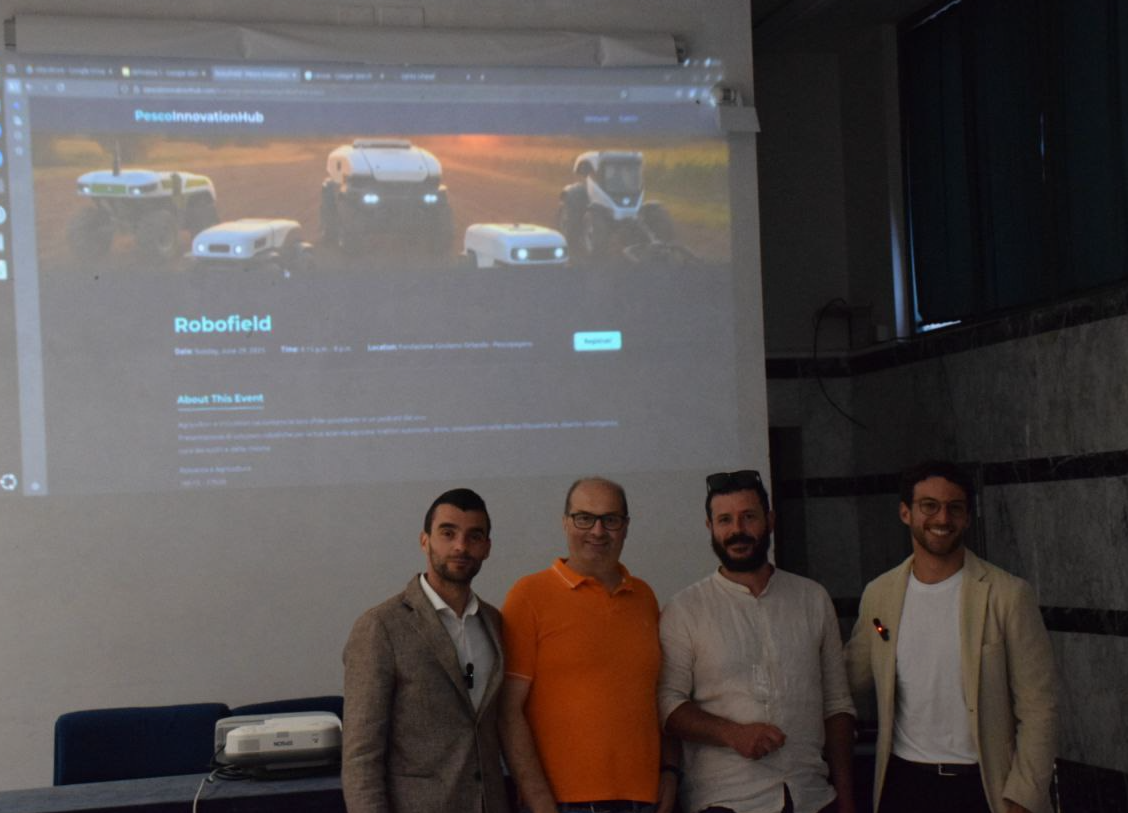
A Day at the RoboField in Pescopagano: Three Voices for Innovation in Viticulture
This intervention is part of the RoboField day organized by the Pesco Innovation Hub in Pescopagano, in Basilicata, which combined listening to producers in the podcast with the winemakers and the presentation on robotics in agriculture by engineer Giovanni Balestrieri. For the full account of the event, read Robofield Pescopagano: robotics and viticulture startup. Discover all the initiatives of the Pesco Innovation Hub for innovation in the Lucanian territory.